
Join the Eldernet community to save and share.
Request information or make a specific enquiry.
Join the Eldernet community to save and share.
Request information or make a specific enquiry.
About Ambridge Rose Cottage
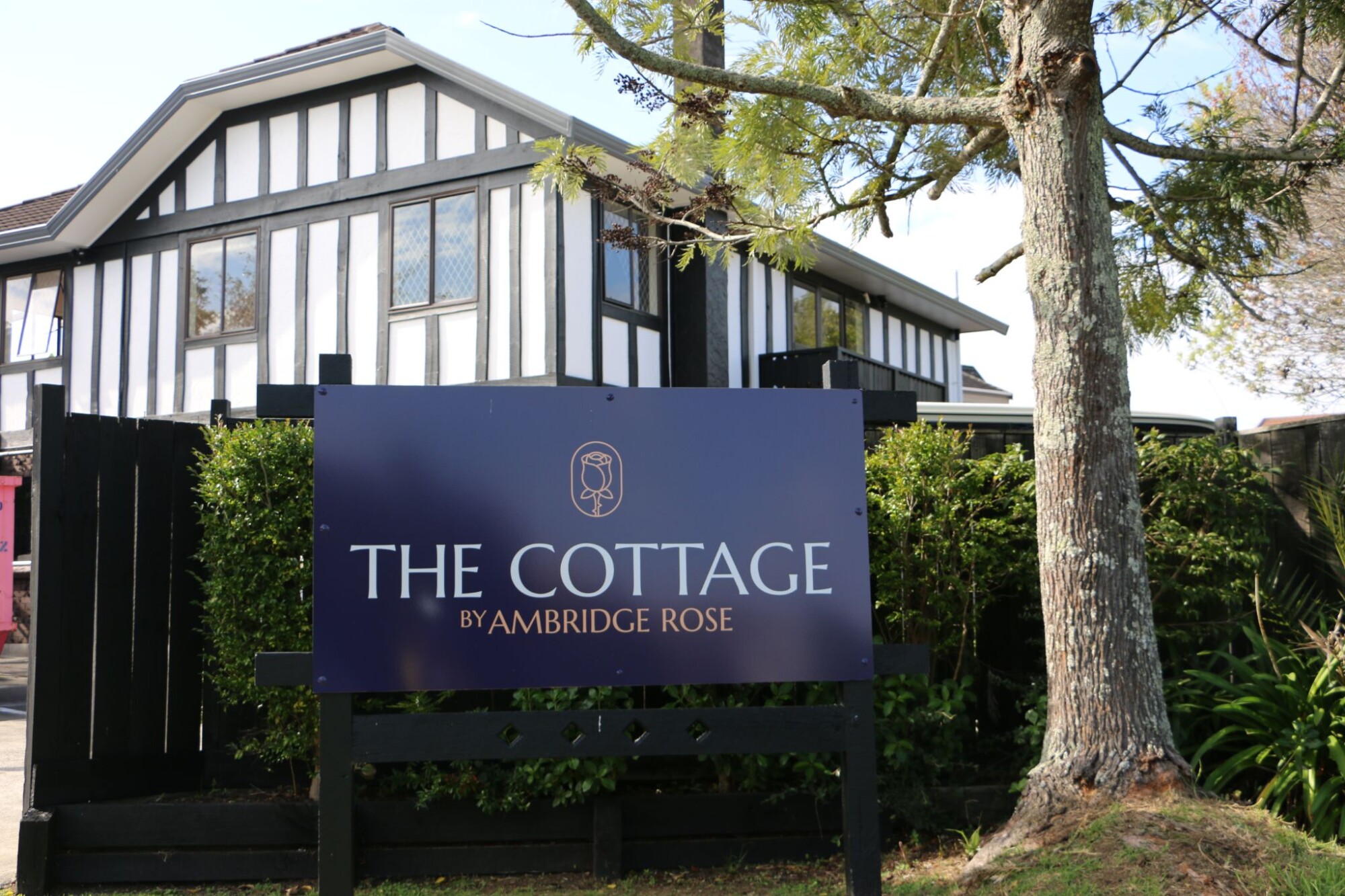
WELCOME TO THE COTTAGE BY AMBRIDGE ROSE - SECURE DEMENTIA CARE HOME!
The Cottage is a boutique dementia care home in Botany Downs – the heart of Auckland’s Eastern suburbs. It is a charming, homely residence which caters for 24 residents, providing an intimate and cosy environment. The Cottage is surrounded by a lush garden, offering a peaceful and serene setting.
Our caring and dedicated staff provide 24-hour support, personalised attention and quality care. We offer a range of services including long-term care, respite care, and palliative care.
HIGHEST QUALITY OF DEMENTIA CARE
At The Cottage, we recognise that every resident is unique, and we strive to create a warm and welcoming home that meets their individual needs.
Our small size allows us to create a family-like atmosphere, where residents can form close relationships with staff and each other.
We are passionate about providing the highest quality of care and ensuring that each resident feels valued, respected and happy.
FACILITIES AT THE COTTAGE
- Private, cosy rooms that promote comfort and wellbeing.
- Daily dementia respite care and family dementia support group available.
- Regular doctor visits ensuring residents receive the care and attention they require.
- Our caring and experienced staff specialise in providing exceptional dementia care.
We invite you to explore The Cottage by Ambridge Rose.
***
ABOUT AMBRIDGE ROSE
At Ambridge Rose, our core purpose is to provide exceptional elderly care that enhances the quality of life for every resident. Caring for older people is a privilege, and we take our responsibility seriously.
TAILORED OPTIONS FOR INDIVIDUAL CARE
We offer a range of tailored care options to meet the unique needs of every resident. With a full continuum of healthcare services available, our rest homes, specialist dementia care and private hospital ensure your loved ones receive comprehensive medical care as needed. We also provide short-term respite and palliative care to support the families of our residents.
FAMILY COMES FIRST
We understand that family support is essential to the well-being of our residents, which is why we welcome family involvement and encourage families to be part of the care team. We also offer an AgedConnect programme to provide regular updates about your loved one, so you can stay connected, even if you're unable to visit in person.
WARM & WELCOMING
Our dedicated, experienced team is committed to providing personalised care and attention, while also creating a warm and welcoming community that promotes socialisation and engagement. We are empathetic and family-focused approach, ensuring every resident feels valued and supported, with healthcare staff and registered nurses available 24/7 to provide compassionate and professional assistance.
ALWAYS AVAILABLE
Our team is always available to assist with daily needs and to maintain a comfortable living space. We believe we can empower every person to live a happier and healthier life. At Ambridge Rose, we’re committed to providing exceptional aged care services at our Auckland rest homes that prioritise the wellbeing, comfort, and dignity of our residents.
With a consulting dietician, hairdresser, podiatrist, physiotherapists, and spiritual support services available, we offer a holistic approach to aged care that meet the unique needs and preferences of every individual.
PERSONALISED ACTIVITIES & MEALS
Our resident's comfort and personal lifestyle choices come first, offering the flexibility for your days to be as active or relaxed as you wish. Our assisted living rest homes feature various activities and events tailored to your preferences, and our chefs work alongside a nutrition consultant to create menus that meet all dietary requirements.
OUR FAMILY LOOKING AFTER YOURS
As a family-owned business, headed by Allan and Linda Sargeant, we are dedicated to enhancing the lives of our residents. We have been providing quality care since 2002 across our rest homes and private hospital, and our healthcare staff has evolved to meet the changing needs of our residents.
We know the importance of having a skilled and compassionate team to provide the best care for older people. We understand that caring for others requires a special kind of person - that’s why our staff are not only highly skilled and experienced but also patient, kind, and fun.
Our experienced clinical team, with extensive knowledge and qualifications in aged-care, sets the standard for the entire care-giving family. We are dedicated to providing personalised care and creating a warm and welcoming environment where everyone feels at home.
Why choose Ambridge Rose Cottage
 Person Centred Care
 Specialised Dementia Care
 Beautiful Gardens
Care Offering
Ambridge Rose Cottage provides a range of care offerings and services. If you are unsure which type of care is right for you or your loved one or would like to learn more about key terms and concepts, explore Eldernet's Knowledge Lab.
Dementia
No Vacancy
Standard/Premium Availability
We currently have no availability
Please feel free to contact us at any time if you would like to come and view and to talk with us.
Updated:
20 Oct 2026
Short Term / Respite
Yes currently accepting short stay admissions, please contact us for specific availability
Regulatory Information
Ministry of Health Certified
Yes
Contract with Health New Zealand Te Whatu Ora
Yes
Care Features & Services
Residents at Ambridge Rose Cottage have access to care, services, and activities that promote wellbeing, this is underpinned by our trust and reputation. Explore our offerings below, for more information on care homes and what they offer explore Eldernet's Knowledge Lab.
Click on a feature or service to see more information.
Registered Nurse
Healthcare Assistants/Caregivers
Physiotherapist
Diversional Therapist
Activities Co-ordinator
Hairdresser
Podiatrist
Dietitian
Kaumatua
Chaplain/Spiritual Advisor
Other Personnel
Click on a feature or service to see more information.
Languages Spoken
Cantonese
Chinese
Chinese dialect
Cook Island Maori
English
Fijian
Fijian Indian
Filipino
Gujarati
Hindi
Interpreter
Mandarin
Māori - Te Reo
Niuean
Punjabi
Samoan
Tongan
Vietnamese
Religious/Spiritual Affiliations
Inter denominational
Non denominational
Roman Catholic
Click on a feature or service to see more information.
May Bring Own Furniture
Single Rooms
Shared Rooms
Rooms suitable for a couple
Ensuite
Alcohol Permitted
Phone Access In Own Room
Wifi
Resident can adjust heating in own room
Lounges/seating areas
LGBTQIA+ Friendly
Day Programme for day stay clients
Outings
Whānau Room
Family Committee
Newsletter
Policy for management of challenging behaviour
Confused Residents
Semi-Secure
Click on a feature or service to see more information.
Aged Care Association New Zealand (ACA)
Other details
Other Key Information
It's not unusual to want to know more about payments and meals. We also invite you to explore the special features and activities we offer. If you have any other questions, please reach out, we’d love to hear from you!
What's included in your fees and what's not?
Please see the manager for full details.
Details about meals
We have home cooked meals by an excellent cook which is overseen by our Executive Chef.
The dietitians recommendations are always implemented immediately.
We monitor waste from the table after clients have been offered 'seconds'. Clients can therefore always have as much as they like. They will also have access to food at any other time.
Interests & activities
The following gives an overview of our services:
Advocate, Age Concern (as required), Alzheimer's Society, Aromatherapy, Art, Arthritis society (as required), Big print books, Bingo, Blind Foundation(as required), Board games, Bowls, Breakfast in bed, Canine friends, Cards, Care and Craft, Children (schools sometimes visit usually around event times), Craft, Dancing, Email, Entertainers, Entertainment, Exercises, Fax, Flower arranging, Games, Garden, Gardening, Happy Hour, Indoor Games, Internet, Jigsaw, Library, Mah Jong, Massage (Reiki), Men (we have a good mix of men and women), Music, Newspaper reading, Organ, Outings, Parkinson's Society, Parties, Pianist, Quizzes, Reading, Roses, RSA, Shopping, Sing-a-longs, Singing, Videos
Location
7 Voltaire Court, Botany Downs, Auckland 2010Public Transport
0.30 km
Lexington Street
Shops
0.50 km
Dairy, bakery, wine outlet and hairdresser opposite Lansdown Hospital
Mall
1.00 km
We are located conveniently between Highland Park shopping centre, Botany Downs and Howick.
Parks
0.20 km
Open park suitable for wheelchairs at the end of the street and childrens' park about 1 km distance.
Library
1.00 km
Highland Park and Pakuranga
To find out more about Ambridge Rose Cottage or to book a viewing get in touch today.
Did you know you can save residential care to view later or share with friends and family?
Join the Eldernet community to save and share.
Eldernet Knowledge Lab
The Eldernet Group is here to support older New Zealanders and their whānau with trusted, independent information to help them make informed decisions. Visit our Knowledge Lab, to find expert insights on care, finances, support options and more.
How much does living in a residential care home cost?
Learn about fees, financial contributions and subsidies.
What is a standard rest home/care home room?
What must be provided in aged residential care.
What are levels of care in New Zealand?
What is rest home, hospital, dementia, and psychogeriatric care?
What is the asset limit for the rest home subsidy 2025-2026?
A guide to asset thresholds for aged care subsidies.
Are you sure you want to close?
Any unsaved changes will be lost.
Are you sure you want to close?
Any unsaved changes will be lost.
Are you sure you want to close?
Any unsaved changes will be lost.